

An interview with Dr. Megan Ennes (part 1)
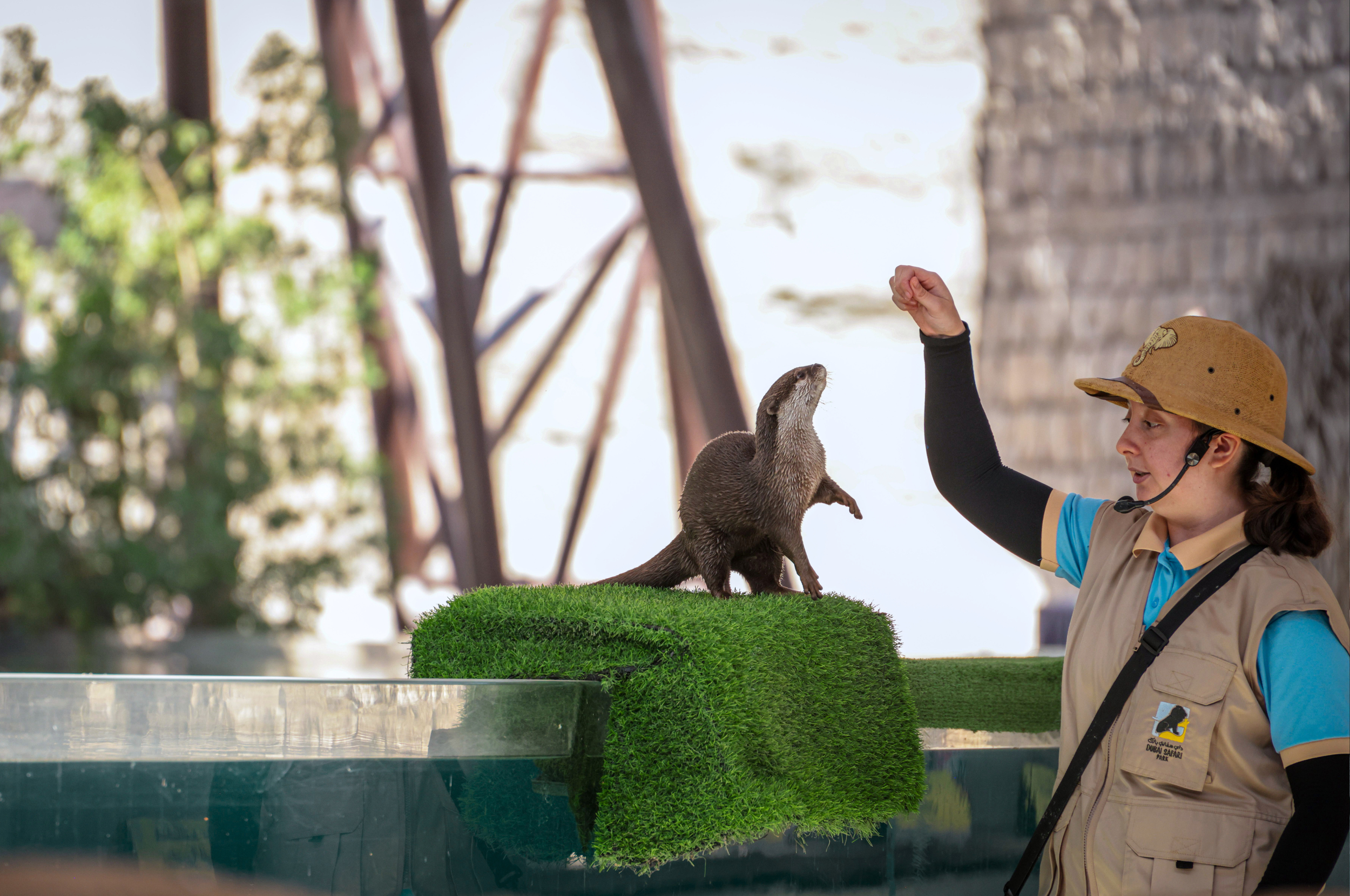
A zookeeper runs an educational demonstration with an otter.
In this conversation with Dr. Megan Ennes, informal learning workforce expert and museum education researcher, we explore the importance of building the informal educators workforce, current challenges that museums and institutions are facing, and five things leaders can do now to support their educators.
Dr. Megan Ennes is associate curator (professor) of museum education in the Florida Museum of Natural History at the University of Florida. Coming from a background in marine biology, informal science education, and environmental studies, Ennes sparked her interest in science education with early experiences volunteering at the Shedd Aquarium and working in marine science programs. Now, she studies museum education experiences, including the workforce development of informal educators.
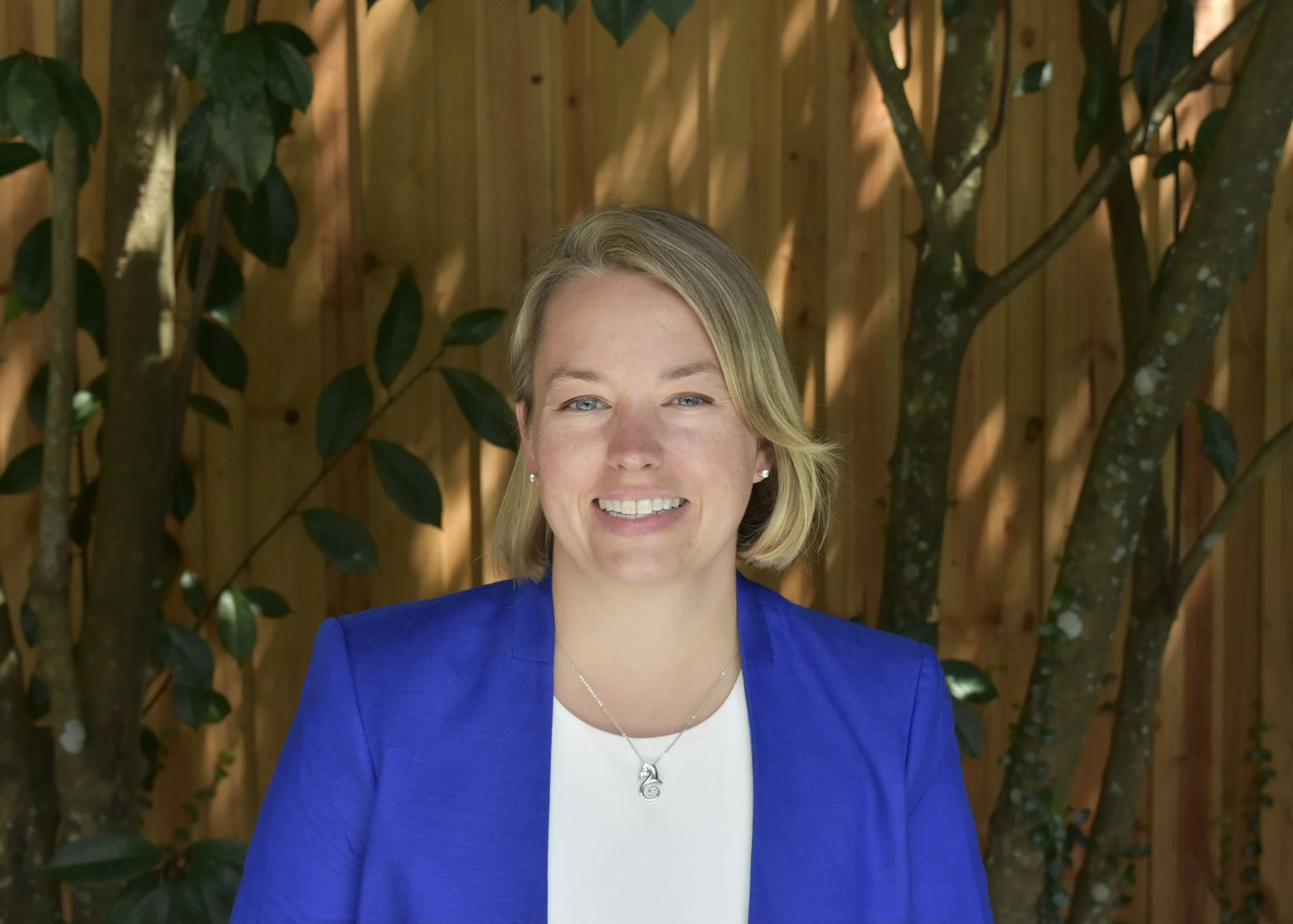
Dr. Megan Ennes, Associate Curator of Museum Education, Florida Museum of Natural History at the University of Florida
Dr. Sarah Dunifon: What are you working on these days? And what does your day-to-day look like?
Dr. Megan Ennes: Currently, a lot of my work is writing grants, analyzing data, and writing papers. I've been traveling across the state this year teaching workshops for museum educators on how to facilitate youth-led civic action projects. So, how to empower the youth in their communities to make change for the environment. And that project's really unique because it's not service learning. We're not saying that you, as the young person, have to solve this problem. It's more about how we can identify what the root cause of this issue is, and who is a decision-maker who can make a policy change to address that issue. So, it's not putting the responsibility for fixing the problem on the young person, which we often do. Instead, it's identifying who in my community has power to make change and empowering these children, these students, to go talk with them. So I do get to do some things like that. I'll be hosting one of those workshops next week.
And because I am faculty at the university, I also teach courses. So I teach a science communications course and a course on museum education.
[Research-wise], I love to dabble in a lot of spaces. That's one of the benefits of being housed at a natural history museum. So I have three major buckets. One on museum educators and their professional learning, and we'll talk more about that. Another big bucket is on scientist communication and how they engage the public with their research. That's been looking at perceptions of behind-the-scenes tours and how we can make those exceptional learning experiences. We have had some exhibits where our scientists were actually working and folks could watch them do their day-to-day job, and [so we’re studying] how that impacts them as researchers, but also as educators. And then a lot with civic engagement for the environment and that sort of thing.
But in this space, I'm really thinking about the people who are facilitating learning in informal science spaces, because a lot of the research in the field is how children learn in museums or how families learn in museums or school field trips. We often forget about the people who are facilitating these programs. So I'm very interested in who these people are, what their skills are, and how we can support and retain them.
My most recent research has been on informal science educators' self-efficacy to teach science. So, how confident do they feel in their day-to-day skills for facilitating learning?
I followed that up with a study on belonging and what it means to be part of this community, and how it impacts whether you want to stay in your job. And that was a very eye-opening conversation for me. It really raised some of my own biases from my experiences as an educator, and the fact that I wasn't taking into consideration the seasonal/part-time education employees' perceptions and how that changes their experience.
So the belonging piece is really important in thinking about how we help our educators feel valued as professionals and to build a community where they can uplift one another. Part of that is important and has led into some of my other research, because everybody comes to this field from very different pathways. There are so few professional or degree programs and things like that for museum education; most people get here in wildly different ways. So, unlike some other professions, we don't often have a shared language to talk about things and how we teach or how we evaluate or even what our titles are. It's been really fascinating to look at the titles that folks have across the different institutions. We are writing a new grant right now, and somebody asked me, “How are you defining a science museum educator?” And I was like, oh goodness.
Wrestling with all of these pieces led me to think about their professional development and what their needs are, and what's available and what's out there. And how we can support the professional development of educators who work in organizations that often have limited time and resources to support professional development.
Dunifon: Before we dig into the practical applications of the research piece, I wonder, from the research that you've done so far, about how seasonal and part-time educators have a different experience and a different outlook on things than maybe full-timers do? I'm wondering what differences you see within those two groups so far?
Ennes: One of the challenges to this work is reaching those seasonal/part-time folks because they often don't have access to all of these organizations. The best way I have of reaching them currently is through professional listservs. All of our professional organizations have memberships and these email listservs. And so the majority of my respondents have been in the field for a while. They're not the seasonal/part-time folks, because I am just struggling to reach them. But some of the things that have come up were, when talking about belonging, somebody emailed me and said, “Megan, you're asking me to think about my institution, but I work for four institutions. I am a gig worker. I don't have an institution. So I don't even know how to answer your questions because that belonging piece is missing.” And so none of them were this person's home institution. I just hadn't even considered that because in my career I've only ever worked for one institution at a time. It hadn't occurred to me that that set of questions was going to be very difficult for them to answer because they didn't have just one place to talk about.
Other issues that came up with the professional development study were that they don't have time and they're not paid to do professional development. So if I send a survey, they have to do it on their own time. And if I share resources for professional development, they often have to do it on their own time because they're only paid to teach a certain program or to be on the floor for a specific amount of time. At many institutions, professional development is not included in that time that they are being paid for. Which then, if you're working at multiple organizations, or the first aquarium I had a full-time job at, half the keepers worked at Bass Pro Shop taking care of the fish there to supplement their income from the aquarium we worked at. So when are you going to fill out my survey and answer my questions if you're running from one job to the next?
Dunifon: Yeah, that's interesting. That also makes me think about the idea that many informal educators come from content-specific fields and not educational fields. And therefore, like with that example, I'm thinking, okay, well, these are “fish people.” Like, that is their bread and butter. And they might not associate as much as “educators.” Because when you're coming in as a fish person and not an educator, it's very easy to stay kind of siloed in your content field and not really looking across at all the other educators that are doing very similar work on primates or stars or whatever.
Ennes: Yeah, exactly.
And that has not changed in the 10 years of data that I've collected. Most folks have content degrees; some may have a secondary degree that might be aligned with education, but not typically more than 25% of folks that participate in my surveys.
Dunifon: Interesting. This also makes me wonder; are folks who go to school to be educators – are they not aware of informal learning as a field, or a choice for their career? Or are the folks who go into education degrees as an undergraduate set on being a classroom teacher, and dedicated to that on the front end?
Ennes: I would guess probably both. Some people just really want to be a classroom teacher. And for a lot of folks, I don't think they know that this is even a possibility. And then sometimes they get an internship, and suddenly they learn that this is a career that you can have, teaching in these out-of-school spaces.
I have a teaching license, but I had never wanted to teach in the formal classroom. I always wanted to be in the out-of-school space because I like the flexibility and feeling like I have more autonomy and creativity with what and how I can teach. And you get different people every day, which is also sometimes difficult because if you have a classroom of students, you can build very close relationships with them. But if you only see somebody once, unless they are a member and come to all of your programs, you don't build that same rapport. The only time I had that was when I was running a homeschool program and the same families came every month. And then you start to actually get to know the students and can build that. So I think it really depends on whether you want the structure of a K-12 classroom or if you want the more loose experiences of teaching in non-formal spaces.
Dunifon: As a part of your research or separately, have you done any work that looks at the academic backgrounds of museum educators?
Ennes: I do ask that in most of my studies, but it's mostly [questions] like, “Do you have a degree in education or do you have a degree in science?” and that sort of thing. So not much more than that. On one of the surveys we ask, “Have you had any training on how to work with families or have you taken any specific classes on teaching?” But it's because it's really just hard to group folks. I don't tend to ask more deeply than that.
Dunifon: Yeah, I'm wondering about it just from the sense of building the field and awareness of the field. And could schools of education be more cognizant of this as an opportunity for their students? Should they be talking about it more? Because we do have museum studies programs, and there are certain schools of education that have advanced degrees in informal or out-of-school learning, but by and large, it is formal-focused. So I just wonder to what degree are folks even aware and talking about these things?
Ennes: Yeah. We just got a grant to study informal science educators' professional self-concept. That may give us an opportunity to dig more deeply into their education backgrounds and how that influences the way they see themselves within the field. I think in the next two years we're going to have a lot of time to really dig into that question.
But for this other grant I'm currently writing, I'm trying to look at which institutions even have museum education courses. The American Alliance of Museums lists 86 museum education programs within their museum studies program database. But these are things like a museum studies certificate program at Auburn University in Montgomery, but they just happen to teach museum education classes within their program, similarly to ours. We have a graduate program in museum studies, but mine is the only class on museum education.
But then there are a lot more environmental education programs. My master's is actually in environmental studies with a focus in environmental education. But teaching outdoors and teaching inside an aquarium are not the same thing. So we're still trying to figure out what a professional pathway looks like to get here. And so that's a big part of what hopefully we'll be looking at in the next couple of years.
Dunifon: Yeah. Well, I'll stay tuned then! Let’s go back to your research on workforce and all of these different affects and professional development. You know, a lot of readers of this newsletter are folks that are in more managerial roles. They might work with educators, but they might be directors or program managers. I’d really love to provide some tactical advice for them. So, what are five things that nonprofit leaders can apply from your research to help build and retain their educators?
Ennes: So, I did some thinking on this. Having time and funding for professional development, making concrete time is important. Maybe once every two weeks your educator gets an hour to spend on online professional development, or attending a local training, that sort of thing. Setting aside time to do that that is paid, and funding for professional development. Whether that is paying them for their time to attend this, or if whatever it is has a cost, which I know can be limited. But there are a lot of really great online programs these days.
The Lawrence Hall of Science has a new professional learning community where you can take their Reflecting on Practice training, which is developed by Berkeley and the Lawrence Hall of Science. Those materials are really fantastic for helping people understand how people learn and how to effectively teach that. That's more of a cohort model. So it would work best if your entire education team goes through this together.
But time and funding - and I think we can get creative about what that looks like to make sure that we are offering it in times that maybe we have lower visitation or fewer school groups or things of that nature.
To support that, I think having your staff do a self-assessment of their skills can be really helpful to identify where there are opportunities for growth. That way you can take your limited time and funds and put them towards a topic that might support more of your staff at once, as opposed to having everybody do different things. But also, if everybody's learning something new and different from everyone else, then they can teach each other, and you might get a better return on your investment because everybody's growing and supporting one another. But having those self-assessments can help your educators think about where they need support, and also what they're really good at, but also where there are opportunities for growth.
I have an assessment that folks can use to do that, and with my colleagues from the Wildlife Conservation Society, we just did a presentation on professional development at ASTC this fall, and Alix has developed this great self-assessment tool where educators can also evaluate themselves. So there's a number of tools out there. The Group for Education and Museums, GEM in the UK, has a set of competencies that you can use to do a self-assessment. And they also have resources for adding products that show how you assessed yourself. So whether it's like a video recording of yourself teaching that thing, or somebody who has done an evaluation for you, or things of that nature. And several of the organizations in the US have also recently created some competency frameworks. The Association of Zoos & Aquariums (AZA) has one, the Association of Science and Technology Centers (ASTC) has one. So, helping your staff and giving them time to assess themselves can then help them better tailor their own professional learning.
It’s also important to think about how to build community within your own staff and across other organizations. My research has shown that feeling part of the community and feeling belonging is really important for supporting our staff, their well-being, and their desire to stay at our organizations. Whether that looks like having a lunch with your staff, scheduling something on a day when maybe things aren't as busy, or breakfast before you open, or some way that just gives folks time to engage with one another. You do want to be careful about if you're going outside of hours. There's some concern about forced team bonding outside of work hours. So not pushing in that direction. But just thinking about is there another institution locally where your educators could meet up, and you come to our museum, we go to your museum and get to know what other people do.
But even if you work in the same building, if your role as an educator is very different, you may not get time to get to know the other folks. I was a floor educator at my aquarium, but then we had all the special events, special activities, folks who did our school groups and our field trips and our sleepovers and things like that. And we didn't really overlap as much because I was on the floor talking to families and they were in the classroom talking to schools. Even if you're in your own building, it's quite possible your educators don't know each other.
Something else that is really important for managers to do is acknowledge the skills and expertise that your team has. And I think that can be challenging because there are so few formal pathways to getting here; it's easy to assume that anyone can do this job. Whereas the research shows educators in informal science spaces are highly skilled and experts at what they do. And so acknowledging that and treating them with respect and acknowledging them as professionals. Even if you are not the person supervising the education staff, how you talk to them can really convey whether or not you see and acknowledge and understand that this is a whole field and that these folks really do have amazing skills for working with the public. What that looks like, we'd have to think about it. But even just adjusting your own mindset, if necessary to do that, is really important.
We'll talk about this some more, but helping your staff to have a work-life balance and helping them to understand that while this is a passion field, there should be work and then there should be when you're not at work. I was talking with a bunch of educators recently at NAAEE [the North American Association for Environmental Education 2026 Annual Conference], and somebody was saying that their boss used to text them after hours about things for the next day. And you're gonna burn out your staff real fast if you're doing that. So thinking about how to support a better work-life balance for all of us, especially the supervisors, because I know they're probably worrying about stuff at work, and it's possible their supervisors are messaging them things for the next day. But how can we start to set realistic boundaries between when we're expected to be on and when we're not? Because being an educator, you are on all day, and that takes so much energy. And then you're asking me to do more work when I get home. You're burning the candle at both ends.
Dunifon: Definitely. I remember from my educator times, when you're on it is so much energy that you're burning. Then when you're off…
Ennes: Like, I don't want to talk to anybody else for the rest of the night.
Dunifon: [Laughs] Exactly! Let's talk a little bit about the field of informal learning. You've held both practitioner and researcher roles in museum and informal learning spaces. From your viewpoint, what are some challenges for the workforce that institutions are really facing these days?
Ennes: Yes, and there are a number, so we'll try to keep it concise. The challenges are across the board. One of the challenges that I have is translating research to practice, so figuring out how to get the work that I'm doing out to the people who need it most. But also for me to have a better understanding of what the field actually needs. A lot of the research I do is just based on what I'm observing, but I could probably do a better job of needs assessments or things like that.
I think museums and informal science centers are really well positioned to support their communities. And often our educators are asked to do a lot of roles beyond just teaching. Sometimes we're trying to be all things to all people, which can lead to burnout, as we've been talking about. And so museums are now trying to support wellness in their communities and be a place where folks can come. There are some really cool programs for people with dementia at different organizations. Museums are trying to have safe spaces for folks to support their mental health. Museums are trying to be places where people can come in and build connection and community. And all of those are very specialized skills, and knowing how to serve audiences who identify as being on the autism spectrum - like that is a whole field of study. My sister has a master's degree in that field, so I would never feel qualified to do that level of work.
Yet it is something we are asking all of our educators to do, to be able to serve all of these audiences, to help with their well-being. So there's a big issue with our social and emotional well-being for our educators because they are expected to do all of this. And some of these conversations can be really heavy, or your visitors could be really challenging. And how do we help support the social and emotional well-being of the educators who are expected to support the social and emotional well-being of everyone who comes through the doors? So that's a challenge that I think we're facing.
Also thinking about the fact that a lot of these roles are temporary or seasonal, or the pay is really low. So they're doing all of this, plus potentially working a second job, or not sure how long their contract is going to last, or if the museum hits financial issues, oftentimes the education department is the first one fired. Having to come in and be in this space and do all of these amazing things for your visitors, talking about things like biodiversity loss or ecological change and things of that nature, but also making sure people are having a great time while they're there.
It's a tough juxtaposition to have to ensure a great visitor experience while talking about very challenging issues. So just really thinking about how, as museums, are we trying to serve our communities; how do we serve our staff to ensure that they can do their job serving our communities? And it's a bit circular. But the more our educators feel valued and supported and that they have the skills and tools they need to support our communities, the better outward-facing experience our visitors will have.
Dunifon: Definitely. If folks are interested in learning more about your work, where would you refer them?
Ennes: So I do have a website. It's called the Museum Education Research Group. That's a quick and easy place to find what I'm doing. My most recent article that I published for ASTC really brings together the belonging and professional development work, particularly for supervisors thinking about how to support their folks in those spaces. And yeah, feel free to reach out to me also.
We hope you enjoyed this article! If you’d like to see more content like this as it comes out, subscribe to our newsletter Insights & Opportunities. Subscribers get direct access to our blog posts, as well as recent news and resources, funding, jobs, and professional development opportunities from the informal STEM learning community. Join us!