

An interview with Dr. Megan Ennes (part 2)
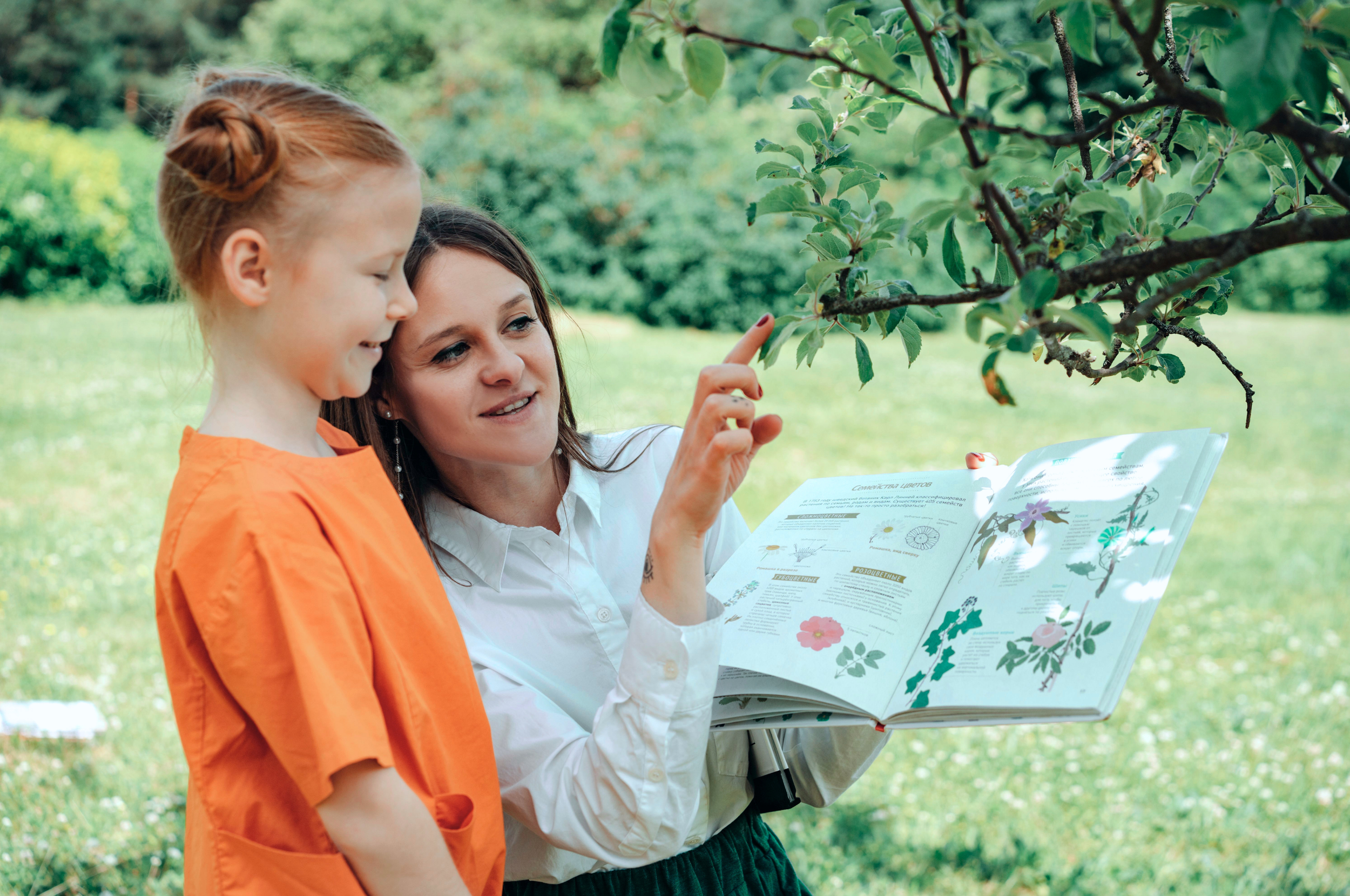
An informal educator identifies a tree with a student
In part two of our conversation with Dr. Megan Ennes, informal learning workforce expert and museum education researcher, we explore what incoming educators need to know, why we all need to better value our informal educators as skillful professionals, and CAMZIE (Community of Aquarium, Museum, Zoo, and Informal Educators): a new professional learning and networking community for informal educators of all disciplines.
Dr. Megan Ennes is associate curator (professor) of museum education in the Florida Museum of Natural History at the University of Florida. Coming from a background in marine biology, informal science education, and environmental studies, Ennes sparked her interest in science education with early experiences volunteering at the Shedd Aquarium and working in marine science programs. Now, she studies museum education experiences, including the workforce development of informal educators.
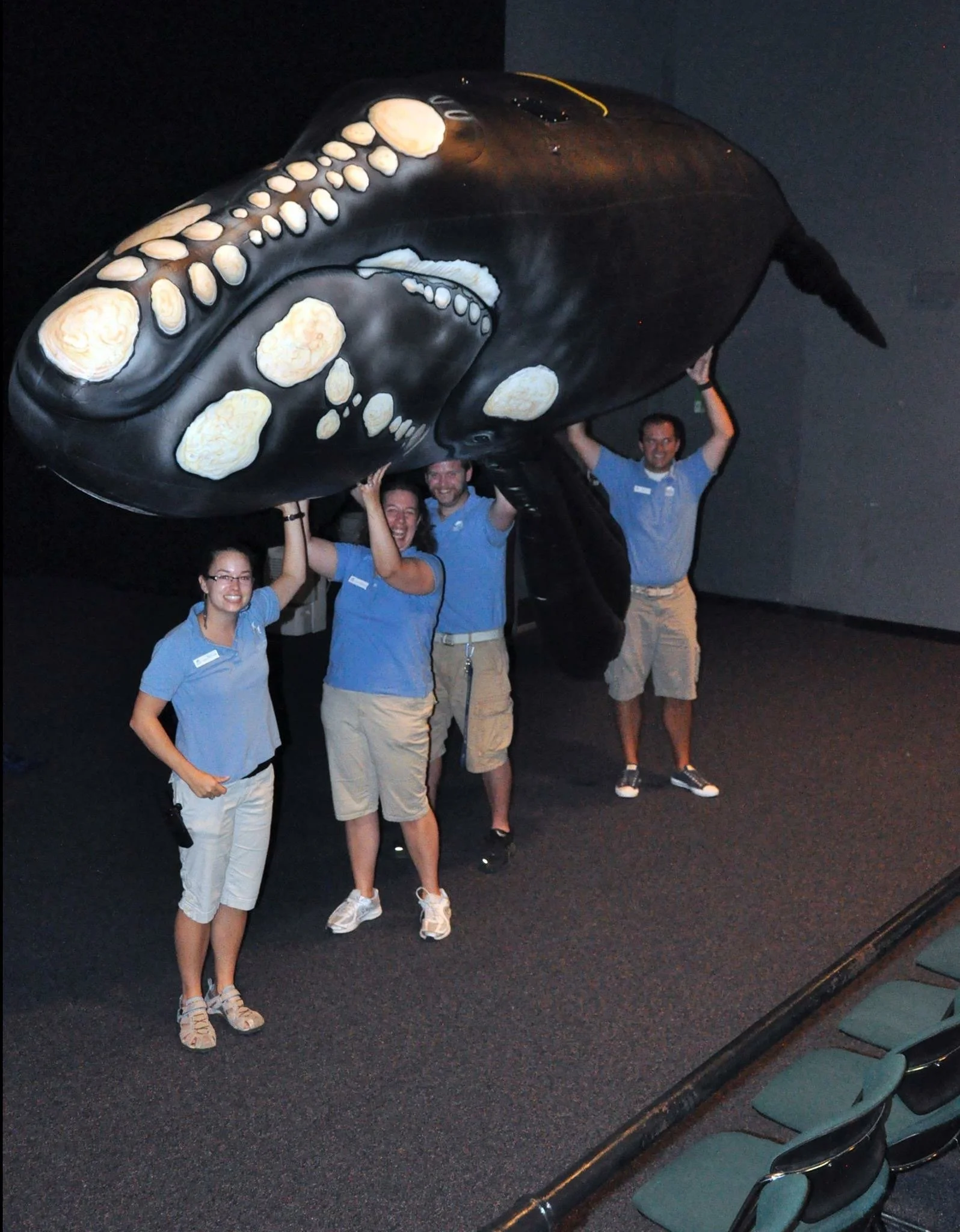
Dr. Ennes and other informal educators at an aquarium
Dr. Sarah Dunifon: What do you wish that people outside our field knew about informal educators and the work they do?
Dr. Megan Ennes: This is a profession full of highly skilled people who are so passionate about the work they do, and it is a challenging job. Often there are some segments of people who think that because they went to school, they know how to teach, and that they could just step in and replace these educators and do their job; that we don't need our education teams or that they are replaceable. But this is a group of folks who care deeply about this space. They are trying, always thinking about how to improve and ensure that we are serving and supporting our visitors to the best of our ability. I just wish people understood that more, and valued our educators for what they bring to our institutions. I am making very sweeping statements. It is quite possible that there are organizations that revere their educators above all other staff members. So if this doesn't reflect somebody's personal experience, these are just very sweeping generalizations.
Dunifon: I think it's an important thing to note, though. I think, oftentimes, people do see the ease with which educators can deliver their content, and therefore they think it's easy. And they don't realize that there are so many principles and so many skills behind that work: classroom management, group management, scaffolding, science communication principles. And these are all things that these educators are trained in and continuously improving on. But because it looks so easy, we think that it's not as skilled as it really is.
Ennes: Right. And if we're doing experiential learning, it may just look like they're playing. And in reality, it is a very purposeful way of approaching content to help people connect. So it may just look like we're sitting in front of a tube, putting feathers in, watching them float to the ground. But there’s thought that goes into ensuring that people are taking away what they need to take away from that.
In the class that I teach, we spend the entire semester asking whether learning is really the goal of museum education. Because sometimes our goal is connection or safety or feeling welcome or excitement and interest and curiosity. Maybe in a particular activity, it's not a goal that people will be able to walk away saying what the physics is behind that feather falling to the ground, but rather that they had a really great time with science and that it's fun and exciting and interesting. Maybe that's the connection we're trying to build.
So they come back so then we can do the learning. And to be clear I never answer this question with my class, we never come to a resolution. It's just something we are always thinking about. Sometimes it does just look like play or fun. And I mean, science should always be fun, right? But that's another thing – looking in from the outside, I think it's easy to miss the thoughtfulness that goes into the programs our organizations offer.
Dunifon: Yeah, that's a great point as well. I think a lot of people do, when they see education as a field, they think only of knowledge gain or skill building. And a lot of the work we do in the informal space is these more affective things: belonging, self-efficacy, confidence, interest, curiosity, excitement, empowerment. We're trying to stoke that sense of connection.
Ennes: So, you know, it may look easy, but folks are working hard.
Dunifon: Yes, exactly. What advice do you have for new folks coming into the field?
Ennes: This is a passion field. And, especially when we're new and young and just so excited to be here, it is so easy to pour our entire selves into our job. And I just remember my entire identity being about my role as a museum educator. And that if I wasn't going above and beyond and making sure that everybody was having the most amazing experience, I just felt like I was failing and not living up to what I should be doing.
I think it's really easy to have unrealistic expectations of what we should be pouring into this role. And so I think, particularly as early career folks, figuring out how to set professional boundaries with your time and your capacity and working, and having supervisors really work with their staff to make sure that you don't burn yourself out right away.
Building identity outside your professional roles is really important. So I'm learning to paint watercolor. It's very difficult. It is a great part of my brain that I don't use otherwise, but that's something I'm working on to try to better separate my professional identity from my personal identity. I guess regardless of where you are in your career, it's something that’s easy to fall into. My identity is a museum education researcher now, but I also paint watercolor. I'm a cat mom, I do photography, and really just trying to think about balancing the love for what we do with the love for our lives and ourselves. It’s just one of the things I think we should be thinking about across our entire career, but particularly when we're supporting our early career folks, I think that's great advice.
Dunifon: Okay, so for these young people who might be interested in the museum education field or the informal learning field, I’m wondering: how would you recommend that young people find out about opportunities in this field? Are there a couple of platforms or spaces that you think are particularly good at spreading the word?
Ennes: Yes. So depending on what form of informal science you want to go into, because again, zoos and aquariums are a bit different from science museums, which are a bit different from natural history museums, which are very different from state and national parks. So, depending on what flavor of informal or non-formal science you want to get into, each of those professional organizations have great job boards: AZA, ASTC, NAAEE – all of those are great. The University of Delaware has a weekly email called Muse Weekly from the Museum Studies department. They send out a weekly newsletter, and they do a lot of thinking about sharing paid opportunities and being very transparent about whether something is a volunteer opportunity versus how much a particular role would be paying. I think their email is really great. Alli Schell on LinkedIn has a Monday job email that she sends out. She spends a lot of time curating resources for folks. Those are some of the places that I keep an eye on just to see what's going on in the field in terms of finding roles and positions.
Dunifon: So how did you end up in the role you hold today? What was your career trajectory?
Ennes: In high school in Indiana, we had a marine biology program. So I got scuba certified when I was 14 and decided I was really interested in marine biology. My parents found out that you could volunteer at the Shedd Aquarium in Chicago, so I used to take the train from Indiana into Chicago and then walk through the park to the aquarium and volunteer. But because I couldn't be there on the regular, I did birthday parties and ornament decorating, and crafts and activities and things like that.
But during my breaks between what I was supposed to be doing, I would go up to people at the exhibits and say, " Do you know what is so cool about this fish?” And that's when I realized I just really loved telling people about the world and how amazing it is. So I pursued a degree in marine biology with a high school biology teaching license because I wanted to teach in aquariums, and I didn't know how one did that. So I just sort of made my own pathway and was lucky enough to go to college in Wilmington, North Carolina, and the North Carolina Aquarium at Fort Fisher is just down the road.
I started working [at the aquarium] my junior year of college and really fell in love with marine science education and informal science education. I moved around a few different places, taught at a marine science camp in the Florida Keys right after college, moved to a for-profit aquarium after that, where I learned a lot about what I like and don't like in a workplace. I was really fortunate to get back into school in Wilmington, where I was then hired full-time at the aquarium, and I was there for five years. I loved what I did and getting people excited about our planet and what makes it special and how we can all work together to make it a better place.
But I realized it's challenging to find positions like that sometimes, because there are very few professional pathways to getting there. So I decided to go back for my PhD to learn more about the profession of being an informal science educator, and to really dig deeply into it. When I graduated, I was hired here at the University of Florida, where I became first the assistant, now associate, curator of museum education. I was the first person in the nation hired as faculty to study informal science education and to be housed in a university-based natural history museum. There are now three of us.
So we're really excited across the nation and really thinking about what does learning look like in these spaces, and how can we do research differently when we are embedded in these organizations. It's been a fun trajectory to get here and thinking about what it means to be an informal science educator.
Dunifon: Let's talk a little bit about CAMZIE. Alongside your work at the university, you're also involved with a new effort to connect informal educators as professionals. Can you tell me a bit more about the CAMZIE project: what its purpose is, how it originated, etc.?
Ennes: As I've been doing my work looking at informal educators, it occurred to me there's no one organization for folks who work in out-of-school spaces to support their professional growth. There are a wide range of professional organizations, such as NAAEE, which focuses just on environmental educators, but that's for formal and informal educators. There's the National Association for Interpretation, and that's more subject-agnostic, but it's very much about interpretation, which is slightly different from education. And then we have all of these other professional organizations where education is a small piece of it. But as I looked around, there was nowhere just for informal educators broadly to come together. And through my professional development work and my belonging work, it keeps bubbling up as something really important and necessary for our field. And I know some folks go to the National Science Teaching Association, but again, that tends to skew more heavily towards formal classroom folks.
So when talking with some of my colleagues and partners, we're like, “Where is this space?” And last year we came together and decided, well, make it. Let's be this space for these folks. And so it is a new free online professional learning community for anyone who teaches in an out-of-school space in any subject. So this might be libraries or national parks or zoos and aquariums, that sort of thing. And it's really just trying to be a safe place for folks to have conversations, to find resources, to learn from one another.
This last week, CAMZIE hosted a webinar on belonging, and Dr. K.T. Todd from the Pittsburgh Children's Museum shared about their research on how we build belonging for our staff as well as our visitors, and why the two go together and are so important. Last month, CAMZIE hosted a workshop on burnout and what that looks like in informal spaces. Because it's not the same, as most of the research is with formal classroom teachers. And so the speaker, Kayla from the Butterfly Pavilion in Denver, talked about what it looks like, how it manifests in our spaces, and how, as individuals, we can try to address it. But also how do supervisors help support their staff in these areas. So CAMZIE has been trying to host all of these seminars based on issues that have bubbled up from my work.
In my professional development research, I've been asking, “What do folks need?” “How do they want it?” and that sort of thing. And so some of that has helped inform the conversations that are happening in CAMZIE. But the community itself is also driving a lot of it. There was a really interesting conversation the other day. Somebody asked a question: “How does your museum define outreach and whose role is it?” And I had not thought about how complicated it was until I started reading what other people were saying. Here at our museum, we are getting ready to reopen and are wrestling with some of those conversations as well, like, who's responsible for what kind of programming? And how does it fall into the departmental structure? Or is it marketing's job to do outreach?
So it's been really interesting to think about these issues that folks are wrestling with on their own. But now they can come together and have these conversations and hear from other folks who may not be in the same kind of museum they are, but are going through similar challenges. And so CAMZIE has a newsletter; it has a resource database. CAMZIE is not trying to create new resources because there are so many great resources out there. It's trying to make it easier to find things. There are spaces for folks to have these conversations. There's also the webinars, and then really just trying to bring folks together and be a community where you may be the only person at your organization, or you may be the only person at your organization doing exactly what it is that you do.
This is really supposed to be a place where folks can come together, and it's intended for folks all across their career span. But particularly for our seasonal part-time, early-career folks who may not have access to other resources such as all of these professional organizations that I've been talking about, because either you need an institutional membership, which usually means that you need to be full-time with an email address at your organization, or you have to pay to be a member of these organizations. When I was seasonal staff, I couldn't afford to attend any of these things. So we’re trying to be a resource across the entire career span for free.
Dunifon: What else is important for the informal learning community to know, either about your work, or CAMZIE, or anything else we've discussed today?
Ennes: I think there are a lot of really interesting conversations happening right now, and I think a lot of organizations are thinking about what our work looks like moving forward. I know the National Academy of Sciences is working to rewrite their big report on informal STEM learning, so we should see that coming out in the next couple of years. I think it's a two-year process, and there's a lot of really cool research going on and a lot of really cool resources out there. But again, they're hard to find. So trying to figure out how to bring all of this together in one space.
I think a lot of the research that's happening is really neat, and I think if folks are interested in some of the work that's happening, whether it's mine or some of the other folks in this field, I think people should feel comfortable reaching out and asking. I had a call earlier this week with an education director from somewhere out in the Pacific Northwest who just really wanted to know about my research and the findings and what it means for their work. So I think you should feel welcome to reach out to people who are working in this space because, I mean, every academic loves to talk about their research. So we would be happy to tell you all about it.
If there are burning questions that you have, I think there are opportunities for collaboration and co-design with research between educators and museum staff. For example, this grant that I'm working on right now, I am pulling together a really cool group of folks from a wide range of organizations to help me think about workforce development work, because I haven't taught on the floor in over 10 years. And so what it looked like for me is very different. I try to make sure that my work brings in the community that I'm trying to serve. So I just reach out, connect again. It's all community. We're all community.
Dunifon: That's one of my favorite things about this space, is how collaborative and like community folks are. It's very rarely competitive. We're all cheering for each other. We're all trying to work together. Like we're on the same team, which is wonderful.
Ennes: Yes. And we don't need to be reinventing the wheel, and there's enough work to be done in this space that we can all have a piece. We don't need to be hoarding the work or the research. I took two undergrads to NAAEE last week, and I was like, go introduce yourself to these people who work in these jobs that you want. I was like, they're going to be so nice and talk with you, and I do love that so much about this field. There were folks there at the conference who were like, it is so great to see you. And I'm like, I've only met you once. So it's just a really fabulous community to belong to.
Dunifon: Thank you. And then one final fun question for you: What other projects or ideas, whether in the informal learning space or somewhere else, are catching your interest these days?
Ennes: Yes, there is a lot of really cool work going on in this space I've been really interested in. Alli Schell and Elin Filbey have a really cool podcast called Curate Your Career, and they're really trying to help build up everybody in the field and thinking about how you work in this space. But Elin's work is also important. She has a consultancy called Deaccessioned Career Coaching. And it's about how you transition from this space and what your transferable skills look like and how you can remain engaged in this kind of field if you, for some reason, have to leave the informal science space. Those things are connected to the work that I do, so I've been really interested in what they're thinking about.
A lot of work in families, I think, is really interesting. Like, how do we support family engagement in these out-of-school spaces? Because we can get kids excited about it, but then we send them home to families that don't know what to do with that. And if we bring the family together as a whole for thinking about these kinds of things, then we're setting everybody up for success, both our caregivers and the youth. So I really love all the work that's going into family learning.
There's so much on AI right now, so not even sure where to go in that space. We've been working on how informal educators feel about using AI in their work. So hopefully that paper should come out soon. A sneak peek: people are split between I want to use it and environmental educators should never touch AI because of its environmental impacts. So that's been a really fascinating conversation to have around ethical considerations, but also resources that can help you improve your programming and that sort of thing. So some really interesting things that folks are wrestling with in that space.
We hope you enjoyed this article! If you’d like to see more content like this as it comes out, subscribe to our newsletter Insights & Opportunities. Subscribers get direct access to our blog posts, as well as recent news and resources, funding, jobs, and professional development opportunities from the informal STEM learning community. Join us!