

Storytelling for the Future
Sarah M. Dunifon
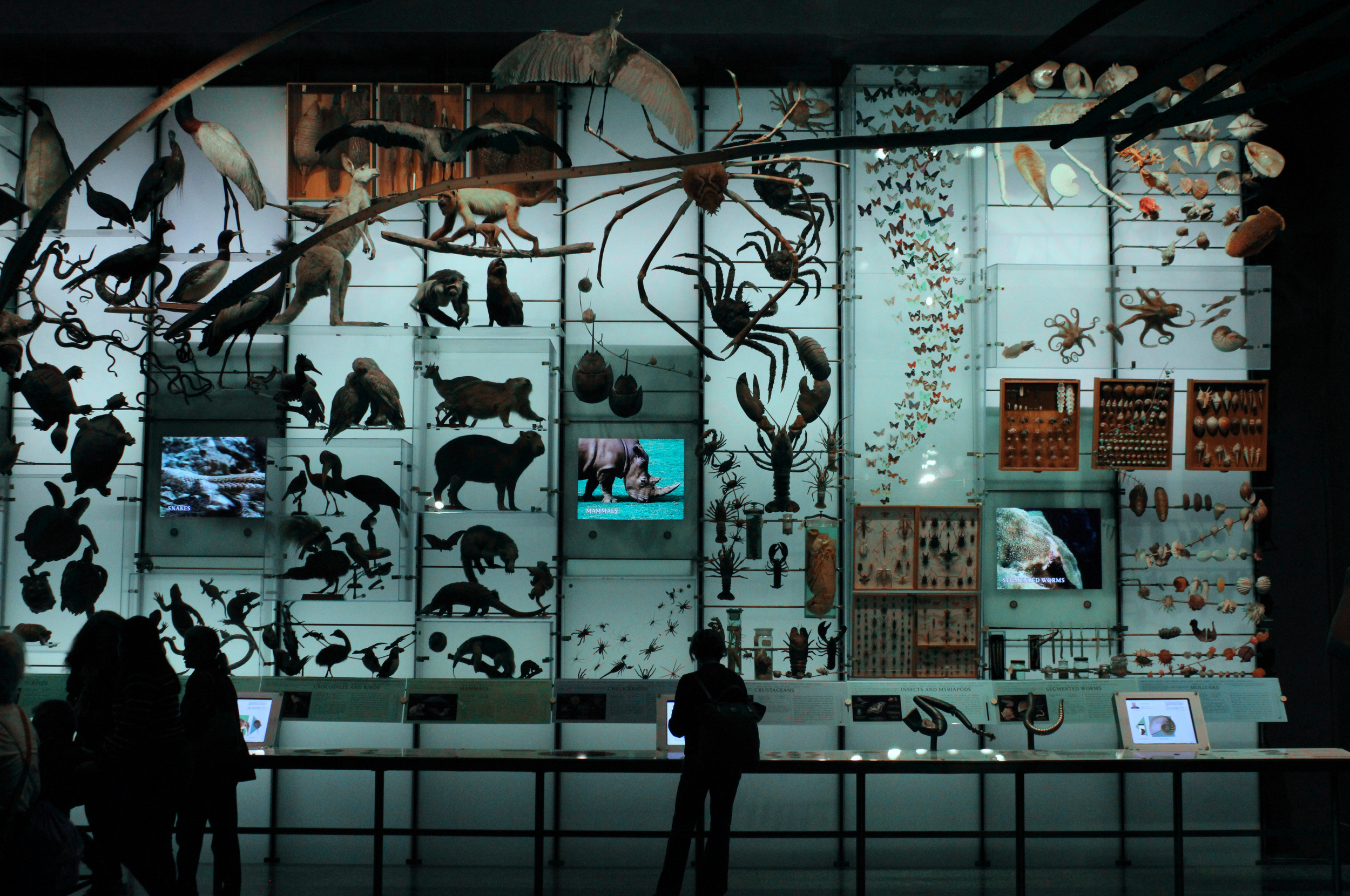
A viewer stands in front of an interactive natural history display.
As evaluators, we’re inherently investigators, facilitators, and storytellers. While most think of the process of evaluation as one that focuses on the collection and interpretation of data, the delivery of our findings is just as important. In this short piece, we’ll explore the idea of digital and participatory storytelling as the way of the future.
Traditionally, the reporting process for evaluation looked a lot like a hefty printed or digital report. While this method is still useful to certain audiences who really want to dig deeper into the data, this isn’t the best approach for all audiences. As we’ve discussed previously, it is always important to tailor evaluation deliverables to your audiences, whether you use slide decks, visual one-pagers, or full reports. No matter the reporting vehicle, the way our data stories are told is critical.
I’ve been thinking a lot about the next phase for effective storytelling. As evaluators, we may need to shift away from our traditional ways of communicating in favor of new and innovative methods, centering the question, “How can we best communicate with our audiences?” Moving into a digital and participatory future, where short-form videos, interactive displays of information, and co-created meaning reign supreme, it may be time to rethink how we communicate our work to others. This may include leveraging new technologies, incorporating more co-creation and participatory methods into the reporting and dissemination process, and co-defining meaning with participants in new ways that speak to how they process and make sense of experiences.
Lately, I’ve been inspired by a few different things, including:
Wordling from the Massachusetts Institute of Technology
A collection of co-created climate future projects that explores different ways to engage storytelling in virtual environments with community wisdom and land-based placemaking.
Storytelling Tools from the Knight Lab at Northwestern University
Open-source tools for media makers that include things like Soundcite (a tool to embed audio into written text), Storyline (a visual timeline generator), and Storymap (a map-making tool that anchors locations to narrative).
Collective Wisdom: Co-Creating Media for Equity and Justice by Katerina Cizek and William Uricchio
This book explores the co-creation of media as a concept and as a practice grounded in equity and justice. There are a lot of crossovers between traditional media as a mechanism to observe and tell others’ stories vs. the co-creation and decentralization of media creation and the practice of traditional evaluation to observe and make meaning of others’ experiences vs. the co-creation of meaning with communities.
If any of these strike a chord with you and you’d like to discuss more, please reach out!
We hope you enjoyed this article! If you’d like to see more content like this as it comes out, subscribe to our newsletter Insights & Opportunities. Subscribers get first access to our blog posts, as well as Improved Insights updates and our 60-Second Suggestions. Join us!